
Share
In this Article
Key Takeaways
| Topic | Summary |
|---|---|
| Hormonal Havoc | Wild estrogen and progesterone fluctuations disrupt temperature regulation and reduce serotonin/progesterone, causing night sweats and sleep disruptions. |
| Symptoms & Triggers | Manifests as difficulty falling asleep, 2-4 a.m. awakenings, or early rising—often worsened by stress and mood disorders during life transitions. |
| Acupuncture’s Mechanism | Addresses Yin deficiency by regulating hormones, boosting melatonin/GABA production, and cooling heat symptoms through strategic point stimulation. |
| Real-Life Results | Women report reduced night sweats, fewer awakenings, and restored sleep within 4-6 sessions, with improved mood and energy as secondary benefits. |
| Starting Steps | Combine specialized acupuncture with lifestyle adjustments (cool bedroom, magnesium glycinate) and progress tracking for optimal outcomes. |
| Recommended Services and Products | |
Perimenopause Acupuncture ![]() |
Targeted acupuncture treatments addressing hormonal insomnia, night sweats, and anxiety during perimenopausal transition. Book Appointment |
Perimenopause Insomnia: The Hormonal Hijack Disrupting Your Nights
If you’re suddenly staring at the ceiling at 3 a.m., drenched in sweat with your mind racing, you’re not alone. Perimenopause insomnia is one of the most frustrating symptoms of this transitional phase, affecting nearly half of women in their 40s and 50s. So, why does it happen? And more importantly, why does acupuncture for perimenopause sleep issues work so well? Let’s break it down.

Get expert tips on healthy living and aging gracefully at 40 and beyond from me.
Join Our Spiritual Wellness Journey: Subscribe for Weekly guidance & Insights
Elevate Your Spirit: Receive Transformative Guidance Straight To Your Inbox
Success! Now check your email to confirm your subscription.
Estrogen and progesterone, the hormones that once kept your sleep steady, start fluctuating wildly during Perimenopause. When estrogen drops, your body’s ability to regulate temperature tanks—hello, night sweats—while serotonin (your “feel-good” neurotransmitter) takes a nosedive. The result? You wake up hot, irritable, and completely wired.
Progesterone, your natural calming hormone, also declines. Since it supports GABA (the brain’s “off switch”), losing it leaves you in that exhausting “tired but wired” loop. Add in cortisol spikes (thanks, stress) and dwindling melatonin, and your sleep becomes as fragile as a house of cards.
Common Symptoms and Hidden Triggers of Perimenopause Insomnia
Not all sleep troubles look the same. You might struggle with:
- Falling asleep (even though you’re exhausted).
- Waking up repeatedly (especially between 2–4 a.m.).
- Early-morning rousing (wide awake before dawn).
And it’s not just hormones. Stress from work, parenting teens, or caring for aging parents—what I call the “sandwich generation squeeze”—fuels anxiety, worsening insomnia. About 40% of perimenopausal women also face mood swings or depression, which further disrupts sleep.
The kicker? Traditional fixes like sleep hygiene or over-the-counter meds often fall short. They don’t address the root issue: hormonal chaos. That’s where acupuncture for perimenopause sleep issues steps in.
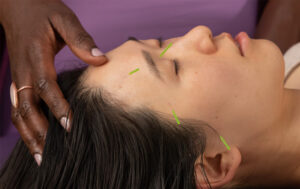
How Acupuncture Targets Perimenopause Insomnia
In Traditional Chinese Medicine (TCM), insomnia during perimenopause stems from Yin deficiency—a lack of cooling, restorative energy that leads to heat (night sweats), restlessness, and a disturbed Shen (your mind’s peace). Acupuncture rebalances this by:
- Regulating hormone fluctuations: Studies show it helps stabilize estrogen and cortisol.
- Boosting melatonin and GABA: Encourages natural sedatives for deeper sleep.
- Cooling “heat” symptoms: Reduces hot flashes and palpitations.
Needles placed at points like Heart 7 (calms the mind) or Kidney 3 (nourishes Yin) send signals to your nervous system to chill out. Most women notice improvements within 4–6 weekly sessions—less waking, fewer hot flashes, and finally, uninterrupted rest.
Getting Started with Acupuncture for Better Sleep
- Find a pro: Look for a licensed acupuncturist experienced in perimenopause sleep disturbances.
- Pair it right: Skip late caffeine, try magnesium glycinate, and keep your bedroom cool.
- Track progress: Use a sleep journal or app to monitor changes in awakenings or energy.
Remember: Perimenopause insomnia isn’t a life sentence. With the right tools—like acupuncture—you can reclaim rest and wake up ready to thrive. Need help? Let’s chat.
This isn’t just about sleep—it’s about joyful aging, stable energy, and feeling like yourself again.