
If you have ADHD and the strategies that used to work suddenly stop working in your late 30s or 40s, perimenopause may be part of the reason. Many women with ADHD notice changes in focus, memory, mood, and sleep as their hormones begin to shift.
Research on ADHD and perimenopause is still new, but it is growing. A large 2025 study found that women with ADHD were much more likely to report severe perimenopausal symptoms, and that those symptoms appeared earlier.
In this post I explain why ADHD symptoms can shift during perimenopause, how it tends to show up, what to test, and how to support yourself through it.
Key Takeaways
| Topic | Summary |
|---|---|
| What changes | Focus, memory, emotional regulation, and sleep can all shift as hormones fluctuate in perimenopause. |
| What the research shows | In a 2025 study of 5,392 women, 54.2% of women with ADHD reported severe perimenopausal symptoms, compared with 30.1% of women without ADHD. |
| Timing | Symptoms peaked earlier in women with ADHD, between ages 35 and 39. |
| Main contributors | Fluctuating estrogen and progesterone, disrupted sleep, stress, and other health factors such as thyroid function or low iron. |
| Medication | Some women notice their ADHD medication feels less effective. Talk with your prescriber before changing anything. |
| Recommended services | Acupuncture for sleep, stress, and hormonal symptoms, and Spiritual Life Coaching for emotional support through the transition. Book Your Session |
Why ADHD Symptoms Shift in Perimenopause
ADHD is a lifelong neurodevelopmental condition. Perimenopause does not cause it, but it can change how manageable it feels. Several factors work together.
Estrogen and dopamine. Estrogen supports dopamine and serotonin, two brain chemicals closely tied to attention, motivation, and mood. ADHD already involves differences in dopamine signaling. When estrogen rises and falls unpredictably in perimenopause, many women with ADHD notice their symptoms become harder to manage. Researchers have seen a similar pattern before a period, when estrogen is low and many women with ADHD report that symptoms worsen and medication feels less effective.
Progesterone and calm. Progesterone breaks down into allopregnanolone, a compound that has a calming effect on the nervous system and supports sleep. As progesterone becomes irregular, some people feel more anxious, restless, and reactive.
Sleep. Night sweats and hot flashes break up sleep, and short sleep affects focus, memory, and patience. For someone with ADHD, poor sleep can make every symptom harder to manage.
Stress and mental load. Midlife often brings caregiving, career demands, and a long list of daily decisions. Systems that worked for years can stop working when the load grows and energy drops at the same time.
What the research shows
A 2025 population-based study from Iceland compared 535 women with ADHD and 4,857 women without. Severe perimenopausal symptoms were reported by 54.2% of women with ADHD, compared with 30.1% of women without ADHD. The biggest difference showed up in women aged 35 to 39, which led the researchers to suggest that perimenopause may begin earlier for women with ADHD.
The study relied on self-reported ADHD diagnoses and shows an association, not cause and effect. Research in this area is still early. A 2025 systematic review found very few studies on ADHD and sex hormones in midlife, and a 2026 clinical review noted that the best way to manage ADHD medication during this stage is still being studied.
How It Shows Up Day to Day
Focus and follow-through
- Brain fog and forgetfulness: losing words, names, or your train of thought more often than before
- Starting and finishing tasks: projects that were once manageable feel harder to begin or complete
- Time: underestimating how long things take, or losing track of time more easily
Emotions and mood
- Sensitivity to criticism: many people with ADHD already feel rejection strongly, and hormone shifts can make it feel sharper
- Anxiety or low mood: feeling on edge, tearful, or flat for no clear reason
- Overwhelm: everyday responsibilities feel heavier when sleep, focus, and mood are all affected at once
Sleep and medication
- Night sweats and restless sleep: waking during the night and starting the day already tired
- Medication feeling weaker: some women notice their ADHD medication does not seem to last or work as well. The 2026 clinical review notes that hormone changes may affect how stimulant medication works, though this needs more research.
These changes are common. As your body changes, the support you need changes too.
Functional Medicine Testing
Many health issues can look like worsening ADHD. Before assuming it is all hormonal, I often order these tests:
- Thyroid panel: TSH, free T4, free T3, and thyroid antibodies
- Complete blood count and ferritin: to check for anemia and low iron stores
- Vitamin B12 and folate: low levels can affect memory and energy
- Vitamin D
- Fasting glucose and HbA1c: to check blood sugar regulation
- Cortisol awakening response (CAR) test: to see how your stress hormone rises after waking
- Sleep evaluation: if you snore, wake gasping, or feel unrested after a full night
Hormone levels such as FSH and estradiol swing widely during perimenopause, so a single test is rarely enough. Tracking your symptoms alongside your cycle often gives you more useful information.

Join Our Spiritual Wellness Journey: Subscribe for Weekly guidance & Insights
Success! Now check your email to confirm your subscription.
Medication and Hormone Therapy
ADHD medication. If your medication seems less effective, bring it up with your prescriber rather than adjusting it on your own. Share what you have noticed about focus, sleep, side effects, and how symptoms change through your cycle. Your prescriber can decide whether the dose, timing, or medication itself needs to change.
Hormone therapy. Menopausal hormone therapy is an effective treatment for hot flashes and night sweats, and better sleep can make ADHD symptoms easier to manage. It is not a treatment for ADHD itself, and it is not right for everyone. A history of blood clots, certain cancers, and other health factors affect whether it is safe for you. The Menopause Societyis a good place to learn more before talking with your doctor.
Ideally, your gynecologist and the clinician who manages your ADHD talk to each other, so your care is coordinated.
Daily Strategies That Help
- Track your symptoms. Use a cycle app or a simple notebook to note sleep, focus, mood, and where you are in your cycle. As cycles become irregular, your own records will show your patterns better than any general rule.
- Protect your sleep. Keep your bedroom cool, use layers you can remove at night, limit caffeine after noon, and keep a steady bedtime.
- Steady your blood sugar. Include protein at each meal and avoid long stretches without eating, which can make focus and mood harder to manage.
- Make tasks visible. Visual timers, written lists, and breaking projects into small steps reduce how much you need to remember.
- Automate what you can. Set up automatic bill payments, calendar alerts, and recurring reminders.
- Keep essentials in one place. Give keys, glasses, and chargers a set place, so less depends on memory.
- Work alongside someone. Doing tasks next to a friend or coworker, in person or online, can make it easier to start and finish.
The TCM View: A Mind That Cannot Settle
In Traditional Chinese Medicine, each organ houses a part of the spirit and holds an emotion. A racing mind, trouble focusing, and repetitive negative thoughts are signs that the spirit is unsettled and emotions are held in the body. In perimenopause, these patterns often grow stronger.
Heart and Shock or Anxiety: the Shen. The Heart houses the Shen, which governs awareness and the ability to be present. When the Shen is unsettled, the mind races and jumps from thought to thought, and it is hard to rest even when the body is tired. In perimenopause, declining Yin leaves the Heart without enough cooling and calm.
Spleen and Worry: the Yi. The Spleen houses the Yi, our capacity for focused intention. Worry weakens it, and the mind returns to the same concerns again and again without resolving them. Holding attention on one task becomes difficult.
Liver and Anger: the Hun. The Liver keeps Qi and emotions moving. When frustration and held anger stagnate the Liver, thoughts become critical and self-judging, irritability rises, and criticism from others feels more painful. This is often worse before a period.
Kidney and Fear: the Zhi. The Kidneys house the Zhi, our willpower and drive. Fear shows up as “what if” thinking and second-guessing, and low Zhi makes it hard to follow through. When Kidney Yin cannot anchor the Heart, the restlessness is often worse at night.
Lung and Grief: the Po. The Lungs govern the ability to let go. When grief is held, it becomes harder to release old thoughts, disappointments, and stories about yourself.
Most people show a combination of these patterns. Identifying yours shows us where to begin.
How Acupuncture Helps: My Release and Restore Series
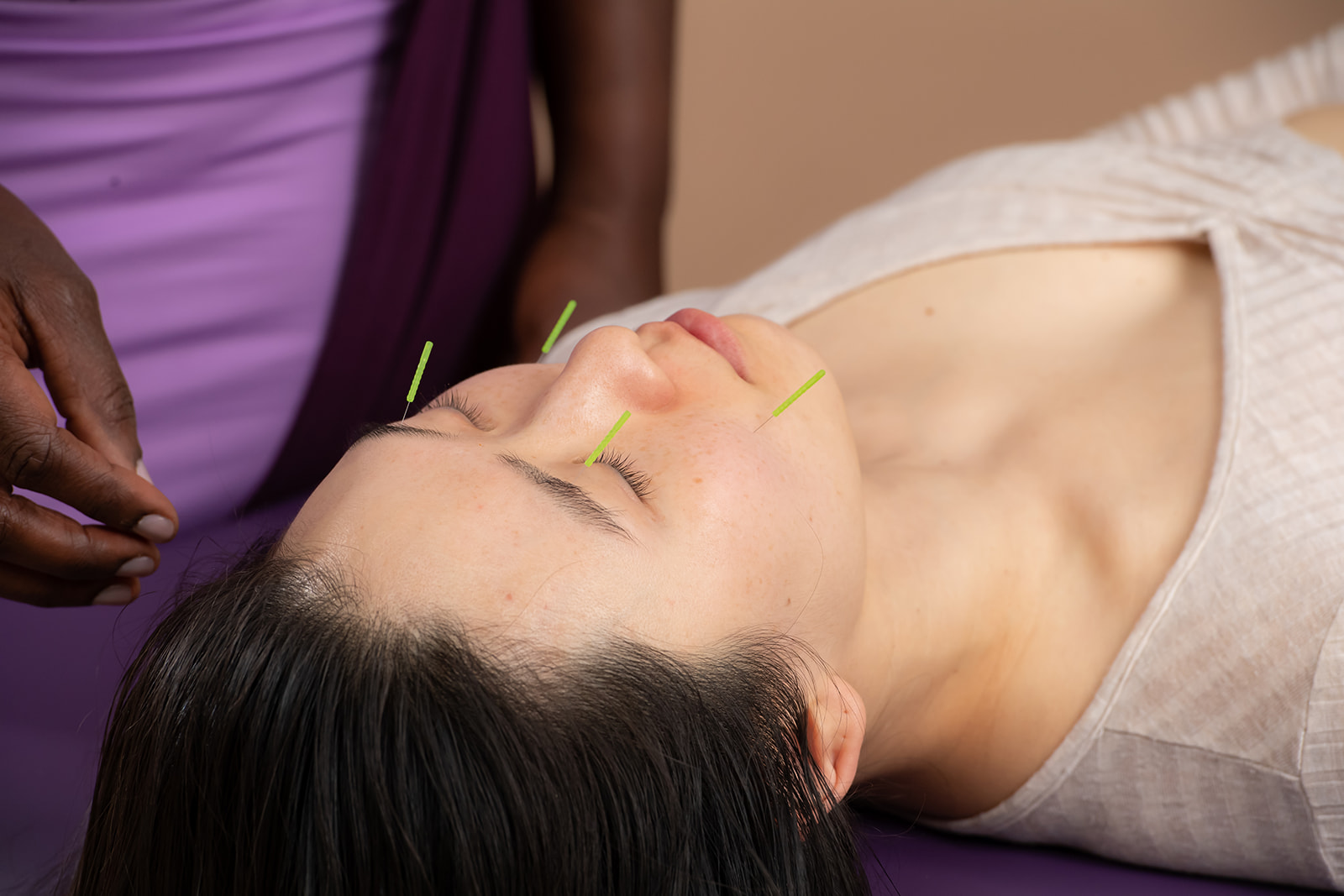
For a racing, unsettled mind, I use my Release and Restore series, a seven-session treatment plan. Each session releases emotions held in the organs and restores calm to the spirit, so every treatment builds on the one before. I use a gentle Japanese style with thin needles and shallow insertion.
It begins with the Aggressive Energy Drain. In TCM, Aggressive Energy is a harmful influence that can come from outside, entering alongside an illness when the body is already vulnerable. It can also build from within, when the way we are living conflicts with our spiritual purpose. Emotions that go unresolved stagnate and create heat, and over time they weaken the organs that hold them. This is one reason the mind can feel agitated and keep returning to the same negative thoughts.
In the first treatment, fine needles are placed very shallowly along the back at points connected to the Lung, Heart, Pericardium, Liver, Spleen, and Kidney. These points sit on the Bladder channel, which runs beside the spine alongside the nerve roots. In Chinese, the word for the nervous system, shenjing, refers to the pathways that carry the spirit, which is why points on the back can calm the mind as well as the body. The shallow needling clears what has built up at the surface while protecting each organ’s deeper reserves.
In my practice, clients tell me this treatment helps release anxiety and the feeling of being stuck, and they leave feeling more grounded and centered. Starting here gives the rest of the series a clear foundation to work from.
Physical, emotional, and spiritual. Physically, the series supports sleep and helps reduce hot flashes and night sweats, which research supports. Emotionally, it releases the worry, fear, frustration, and grief that keep the mind restless. Spiritually, it creates the calm needed to reconnect with your Heart energy and respond to your thoughts with more kindness and patience.
A Heart Energy Practice for a Racing Mind
Heart energy is always present. When the mind is racing, it becomes harder to access. This practice uses Yintang, a point between the eyebrows that calms the Shen and quiets the mind, along with deep breathing.
- Sit comfortably and place one hand on your heart.
- With the index and middle fingers of your other hand, gently tap Yintang, the point between your eyebrows, at a slow, steady pace.
- As you tap, breathe in through your nose for a count of four and out through your mouth for a count of six.
- Continue tapping and breathing for one to two minutes. When a thought comes up, notice it and return to your breath.
- Stop tapping and rest your fingertips on Yintang for three slow breaths.
- On your last exhale, say silently, “I return to my heart.”
Use this practice before starting a task, when your thoughts start racing, or at bedtime to help your mind settle for sleep.
When to Seek Medical Help
Talk with your doctor or prescriber if focus, mood, or sleep changes are affecting your work, relationships, or safety, including driving. Reach out sooner if you notice persistent low mood, intense anxiety, or thoughts of harming yourself. In the US, you can call or text 988 to reach the Suicide and Crisis Lifeline at any time. Seek emergency care for sudden confusion, trouble speaking, or weakness on one side of the body.
If you have never been diagnosed with ADHD but these symptoms feel lifelong, an ADHD evaluation may help. Many women are first diagnosed in midlife.
How I Build Your Plan
When you come in for acupuncture at my Lafayette practice, we start with a full intake. I go over your health history and look at your symptoms, sleep, digestion, cycle, stress, and any lab work you already have. From there I identify your TCM pattern and the functional medicine factors most likely affecting your focus and mood.
Your plan combines acupuncture with practical support for sleep, nutrition, and stress, and it works alongside the care you receive from your prescriber. If something needs a closer look, I can order functional medicine testing. For emotional support through the transition, Spiritual Life Coaching can be part of your plan as well.
When you are ready, book your session and we will build a plan for you.
Not sure where to start? Take the free Heart Energy is Qi profile to discover which pattern is showing up for you.
Frequently Asked Questions
Can perimenopause cause ADHD?
No. ADHD is a lifelong neurodevelopmental condition. Perimenopause can make existing symptoms harder to manage, or make symptoms you have always had more noticeable, which is why some women are first diagnosed in midlife.
Can perimenopause make ADHD symptoms worse?
Many women with ADHD say it does. A 2025 study found that women with ADHD were far more likely to report severe perimenopausal symptoms than women without ADHD, and that symptoms appeared earlier.
Why does my ADHD medication suddenly seem less effective?
Hormone changes may affect how stimulant medication works, and poor sleep and stress also play a part. Talk with your prescriber before changing your dose or timing.
Does hormone therapy help ADHD?
Hormone therapy treats hot flashes and night sweats, and better sleep may make ADHD symptoms easier to manage. It is not a treatment for ADHD itself. Discuss benefits and risks with your doctor.
Are there natural ways to support ADHD symptoms in perimenopause?
Good sleep, steady blood sugar, regular movement, symptom tracking, and simple organizing systems all help. Evidence for omega-3 supplements in ADHD is mixed, and most studies were done in children.
Can acupuncture help ADHD in perimenopause?
Yes, acupuncture can be a helpful part of your care. It works on the symptoms that make ADHD harder to manage in perimenopause. Research shows it reduces hot flashes and night sweats and may ease anxiety, which supports better sleep, focus, and mood. In my practice, clients tell me treatment helps them feel calmer, more grounded, and less stuck. Acupuncture has not been studied for ADHD itself, so it works best alongside the care you receive from your prescriber.
Sources
- Jakobsdóttir Smári, U., et al. Perimenopausal Symptoms in Women With and Without ADHD: A Population-Based Cohort Study. European Psychiatry, 2025.
- Osianlis, E., et al. ADHD and Sex Hormones in Females: A Systematic Review. Journal of Attention Disorders, 2025.
- Wynchank, D., and Kooij, S. Pharmacological Management of ADHD in Women Across Perimenopause, Menopause and Post-Menopause. Drugs & Aging, 2026.
- de Jong, M., et al. Female-Specific Pharmacotherapy in ADHD: Premenstrual Adjustment of Psychostimulant Dosage. Frontiers in Psychiatry, 2023.
- Liu, T. H., et al. Omega-3 Polyunsaturated Fatty Acids for Core Symptoms of Attention-Deficit/Hyperactivity Disorder: A Meta-Analysis of Randomized Controlled Trials. Journal of Clinical Psychiatry, 2023.
- Avis, N. E., et al. Acupuncture in Menopause (AIM) Study: A Pragmatic, Randomized Controlled Trial.Menopause, 2016.
- The Menopause Society. Hormone Therapy.