Key Takeaways
| Topic | Summary |
|---|---|
| Can you combine them? | Yes. Acupuncture adds no drug or hormone, so it does not interact with HRT the way two medications can. |
| What HRT does | Replaces declining hormones. It is the most effective treatment for hot flashes and night sweats. |
| What acupuncture adds | Support for sleep, stress, digestion and emotional balance, with the strongest research for sleep. |
| Testing to consider | DUTCH test, serum hormones, SHBG and testosterone, thyroid panel, blood sugar markers, a stool test and key nutrients. |
| The TCM view | Usually Kidney Yin and Yang decline, Heart and Kidney communication, and Liver Qi stagnation. |
| Safety notes | Share your medications, mention blood thinners, and have unexpected bleeding checked by your prescriber first. |
| Recommended service | Perimenopause and menopause acupuncture to support you alongside your HRT. Book Your Session |
Acupuncture While on HRT: How They Work Together
Yes, you can get acupuncture while you are on hormone replacement therapy, and for many of my clients the two work better together than either one alone. HRT replaces the hormones your body is making less of. Acupuncture works on how your whole system responds: your sleep, your nervous system, your digestion and your emotional state.
I see this often in my Lafayette practice. A client starts HRT, her hot flashes ease, and yet she still wakes at 3 a.m., still feels anxious, or still does not feel like herself. That is not a sign the HRT failed. It is a sign there is more to support.
In this article I’ll walk you through how I look at HRT through three lenses: functional medicine testing, Traditional Chinese Medicine (TCM), and my Heart Energy is Qi framework. You’ll also find what the research shows, how to stay safe, and how to coordinate care with your prescriber.
A quick note: this article is about menopausal hormone therapy for perimenopause and menopause. If you take hormones for another reason, acupuncture can still be part of your care, and we’ll tailor your plan to you.
Why HRT Is Only Part of the Picture
HRT is the most effective treatment we have for hot flashes and night sweats. In October 2026, the American College of Obstetricians and Gynecologists (ACOG) released its most complete menopause guideline in more than a decade. It strongly recommends hormone therapy for hot flashes and the sleep disruption that comes with them.
The same guideline also names non-drug options, including acupuncture, cognitive behavioral therapy, mindfulness, exercise and hypnosis, for hot flashes, sleep and mood. The evidence for these is more limited than for hormones. Still, it matters that the leading OB-GYN organization lists acupuncture as part of menopause care.
Here is what HRT does not do on its own:
- It does not calm an overworked nervous system. Anxiety, a racing mind at night and feeling on edge often have more than one cause.
- It does not change how your body processes hormones. Your liver, gut and methylation pathways decide how estrogen is used and cleared.
- It does not address what you are carrying emotionally. Perimenopause often arrives alongside caregiving, career shifts and big questions about who you are becoming.
This is where acupuncture becomes a partner to HRT, not a replacement for it.
Functional Medicine Testing While on HRT
Your prescriber monitors whether your HRT dose is safe and working. Functional testing asks a different question: how is your body using those hormones, and what else is shaping how you feel? I order these tests for my clients and share the results with your HRT provider when it helps your care.| Test | What it shows | Why it matters on HRT |
|---|---|---|
| DUTCH Complete (dried urine) | Estrogen metabolites, progesterone metabolites, androgens, and your daily cortisol rhythm | Shows whether estrogen is being cleared through healthier or less favorable pathways, and whether stress hormones are part of your symptoms |
| Serum estradiol, progesterone, FSH | Circulating hormone levels | A baseline and a check-in. Useful alongside DUTCH, since some forms of HRT make urine results harder to read |
| SHBG with free and total testosterone, DHEA-S | Hormone-binding protein and available androgens | Oral estrogen raises SHBG, which can lower free testosterone. This can show up as low libido, low motivation or fatigue |
| Full thyroid panel (TSH, free T4, free T3, antibodies) | Thyroid function | Oral estrogen raises thyroid-binding proteins. If you take thyroid medication, your needs may shift after starting HRT |
| Fasting insulin, HbA1c, lipid panel | Blood sugar and cardiovascular markers | Insulin resistance often rises in midlife and affects weight, energy and hot flashes |
| GI-MAP or comprehensive stool test | Gut microbes, inflammation, beta-glucuronidase | Your gut helps clear used estrogen. High beta-glucuronidase can send estrogen back into circulation |
| Methylation markers (homocysteine, MTHFR, COMT) | How well you process and clear estrogen | Slower methylation can affect how you tolerate estrogen |
| Vitamin D, ferritin, B12 | Key nutrients | Low levels add to fatigue, mood changes and bone loss, which HRT alone will not correct |
The Traditional Chinese Medicine View of Menopause and HRT
In TCM, menopause is a natural shift in the body’s reserves, not a disease. The classics describe Tian Gui, the substance that governs fertility, gradually declining around age 49 as Kidney Jing (your deep constitutional energy) changes. The Chong and Ren vessels, which nourish the uterus, become less full.
Two connections guide how I treat this transition:
- Bao Mai, the Heart-Uterus connection. The Heart sends blood and Shen (spirit) to the uterus. When the Heart is unsettled, you may feel anxiety, palpitations, restless sleep and heat rising to the face.
- Bao Luo, the Kidney-Uterus connection. The Kidneys hold Yin (cooling, moistening) and Yang (warming, energizing). As Kidney Yin declines, heat is no longer held in check, which shows up as hot flashes, night sweats and dryness. As Kidney Yang declines, you may feel cold, tired and low in drive.
When the Heart and Kidneys are not communicating well, the classic picture appears: hot flashes, a racing mind at night, waking at 3 a.m., and feeling wired and exhausted at the same time.
The Liver plays a large role too. The Liver keeps Qi and blood moving. Stress, unexpressed anger and a full schedule cause Liver Qi to stagnate, which shows up as irritability, headaches, breast tenderness and mood swings.
Where HRT Fits in This Picture
From a TCM view, HRT supports the Yin and blood side of the system, which is why it calms hot flashes and dryness so well. What it does not do is move stuck Liver Qi, settle the Shen, or restore communication between the Heart and Kidneys.
That is why some clients notice new or lingering symptoms on HRT, such as breast tenderness, bloating, headaches or mood changes. In TCM terms, these often point to Liver Qi stagnation or dampness, and acupuncture addresses them directly.
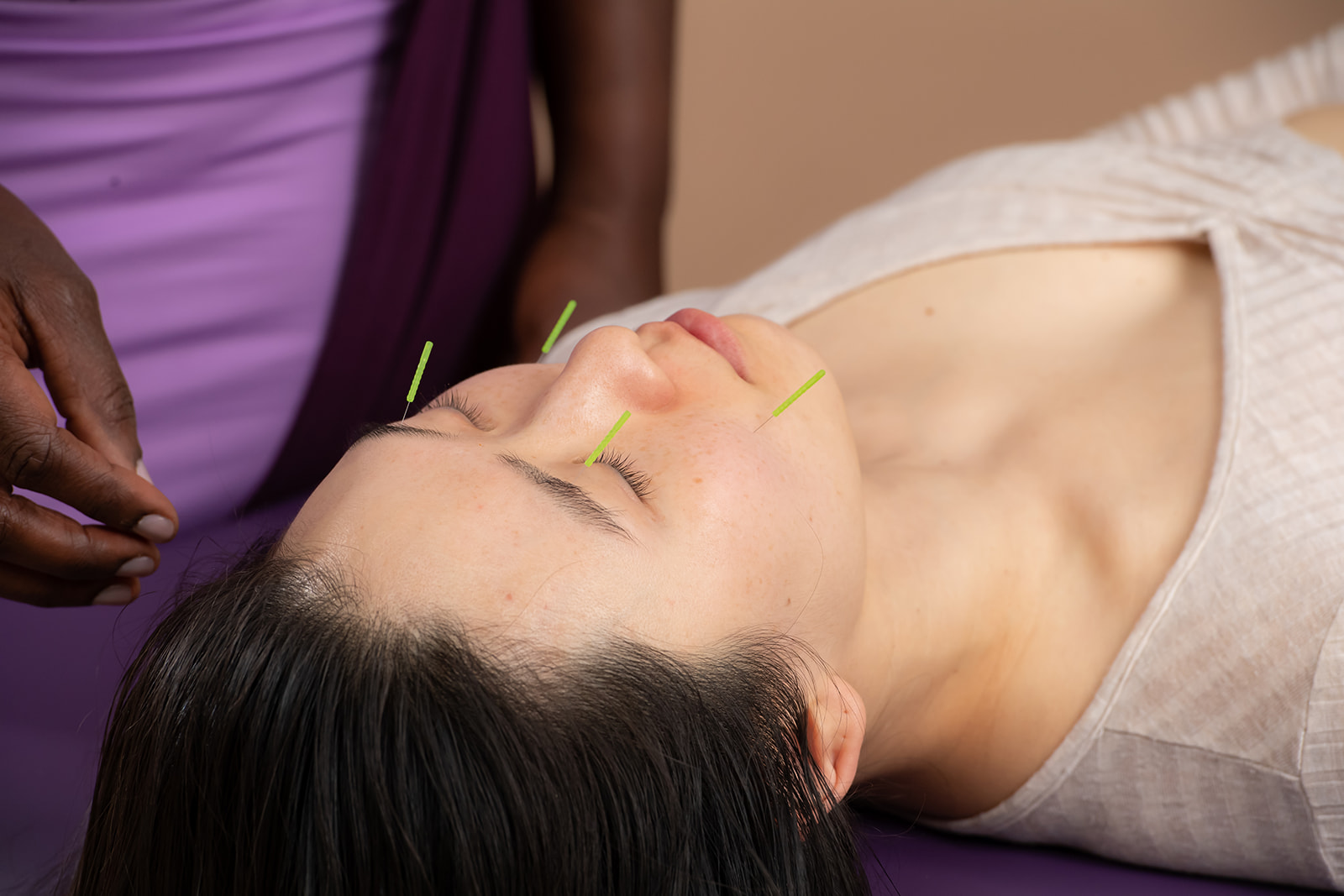
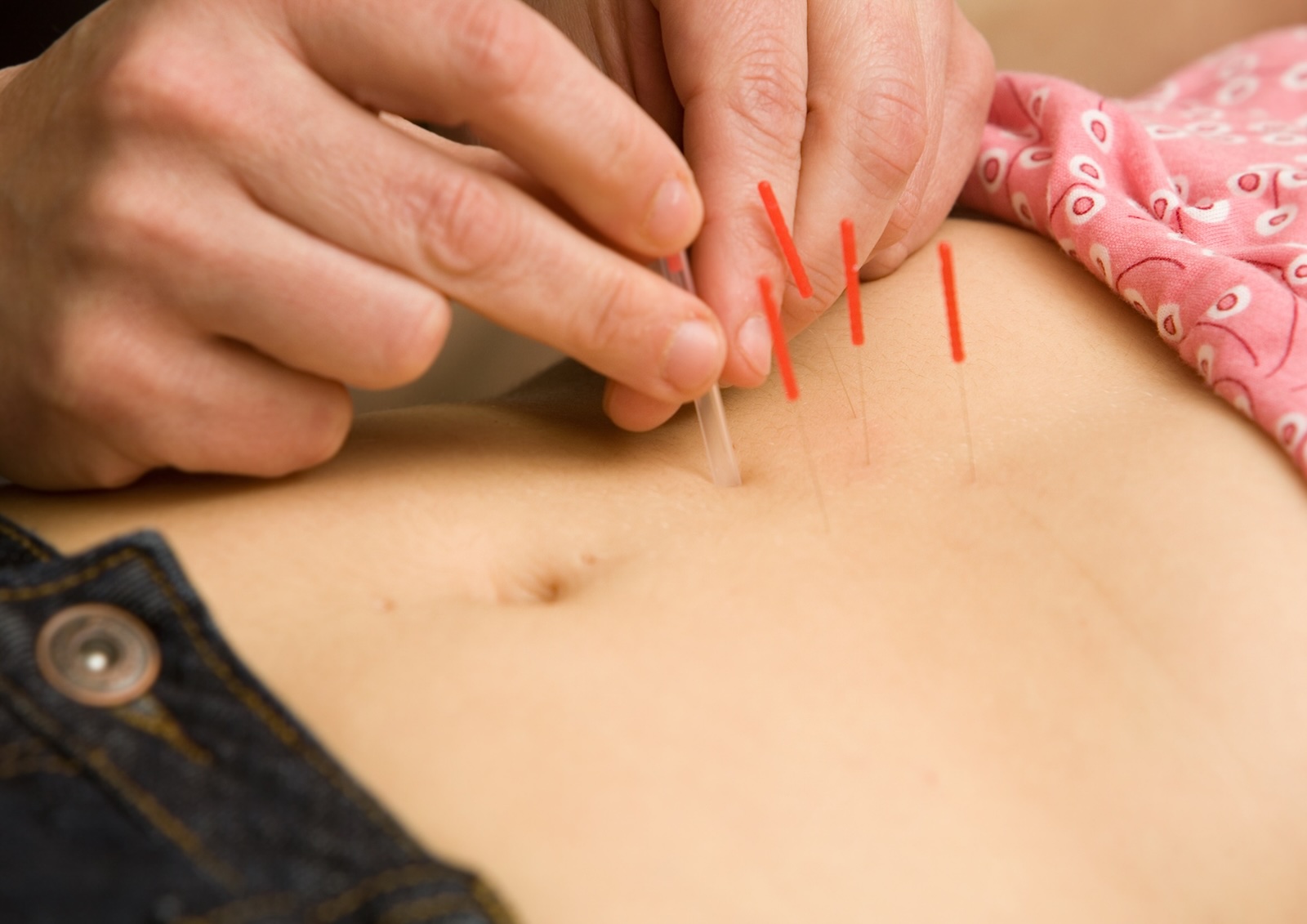
My treatments use Japanese-style acupuncture: very fine needles, shallow insertion and gentle stimulation. Points are selected through TCM diagnosis: reading your pulse, palpating along specific meridians, and looking at your tongue, so each point is chosen for your needs.
Heart Energy is Qi: The Emotional Side of the Transition
My practice is built on one idea: Heart energy is always present, and blocked emotions keep us from feeling it. HRT can steady your hormones. It cannot release the worry, grief or fear that perimenopause often brings to the surface.
Each organ in Chinese medicine holds an emotion. When that emotion is stuck, it shows up in the body. Here is how the five patterns often look in clients who are on HRT:
| Pattern | Emotion held | What you may notice, even on HRT | What treatment supports |
|---|---|---|---|
| Liver / Mover | Anger, frustration | Irritability, headaches, breast tenderness, feeling stuck in your life | Moving Qi so frustration can be expressed and released |
| Heart / Seeker | Shock, anxiety | Palpitations, anxious waking, racing thoughts, flushing with stress | Calming the Shen and restoring a sense of safety and joy |
| Kidney / Restorer | Fear | Exhaustion, low back ache, low libido, fear about aging | Rebuilding reserves and grounding you in your own strength |
| Lung / Releaser | Grief | Sadness about the end of fertility or an old identity, dry skin, shallow breathing | Making space to grieve and let go |
| Spleen / Nurturer | Worry | Bloating, brain fog, cravings, overthinking, caring for everyone but yourself | Strengthening digestion and turning care back toward you |
The Heart is the anchor of all five patterns. When the emotion is released, Heart energy flows again, and that steadiness supports everything else you are doing for your health, including HRT.
Not sure which pattern is yours? Take the free Heart Energy is Qi quiz to find out.
What the Research Shows
The research on acupuncture for menopause is growing, and it is strongest for sleep. Very few studies have looked at acupuncture and HRT together, so here is an honest look at what we know.| Symptom | What the research shows |
|---|---|
| Sleep | An 84-person randomized trial (Li et al., 2020) found better sleep scores with acupuncture than with sham treatment in perimenopausal insomnia. Women on HRT were excluded, so it shows what acupuncture does on its own. |
| Hot flashes and night sweats | Results are mixed. In a 2025 sham-controlled trial (Wang et al.), hot-flash scores improved in both groups and ended up similar. The acupuncture group improved more in overall menopause symptoms, quality of life and sleep, and the sleep and quality-of-life gains lasted 12 weeks after treatment. HRT remains the strongest treatment for hot flashes themselves. |
| Sleep, mood and hot flashes together | ACOG's 2026 guideline lists acupuncture among non-drug options for menopause symptoms, while noting the evidence is more limited than for hormone therapy. |
| Safety | The NIH's National Center for Complementary and Integrative Health reports serious complications are rare when acupuncture is done by a qualified practitioner with sterile needles. |
What this means for you: acupuncture is a safe partner to HRT, with the strongest evidence for sleep, while your HRT addresses hormone levels.
Is Acupuncture Safe While on HRT?
Acupuncture does not add a drug or hormone to your body, so it does not interact with your HRT the way two medications can. For most people on HRT it is a very low-risk addition. A few situations need extra care:
- Blood thinners or a bleeding disorder. Let me know if you take warfarin or another anticoagulant. Bruising or bleeding after acupuncture is usually minor, and I adjust my technique if you take anticoagulants.
- Unexpected vaginal bleeding. Bleeding that is new, heavy or happens after menopause needs to be checked by your prescriber first. I will always refer you if I see this.
- Herbs and supplements. Some herbs commonly marketed for menopause, such as black cohosh, red clover and dong quai, can affect hormone activity. I review everything you take before recommending any herb or supplement alongside your HRT.
- Skin conditions, infections, implants or uncontrolled diabetes. Tell me before your first visit so I can plan point selection safely.
One rule never changes: do not adjust your HRT dose based on how you feel after acupuncture. Bring those changes to your prescriber.
How to Coordinate Your Care
Your care works best when your acupuncturist and your HRT provider share what they know.
Bring to your first acupuncture visit:
- Your HRT type and how you take it (pill, patch, gel, cream or ring) and the dose.
- All other medications and supplements.
- Any recent lab results.
- Your main symptoms and what has or has not changed since starting HRT.
Share with your HRT provider:
- That you are receiving acupuncture, and how often.
- Changes you notice in sleep, hot flashes, mood or digestion.
- Any functional lab results we run together. I am happy to send a summary.
A Heart Energy Practice to Try Tonight
This takes three minutes and works well before bed, when a racing mind or a 3 a.m. wake-up tends to show up.
- Sit or lie down and place one hand on the center of your chest.
- Breathe in through your nose for a count of four, and out through your mouth for a count of six. Repeat five times.
- Ask yourself: what am I feeling right now? Name it in one word, such as worry, frustration, sadness or fear.
- Say to yourself: “I feel this, and I am safe.”
- Take three more slow breaths and notice any shift, however small.
Naming an emotion is the first step to releasing it, and releasing it is how you reconnect with your Heart energy.
How I Build Your Plan
You deserve to feel like yourself again, not just to have fewer hot flashes. When you come to see me while on HRT, here is how we work together:
- We start with your story. Your symptoms, your HRT, your history, and what you most want to feel.
- We look at your pattern. I assess your TCM pattern and your Heart Energy is Qi pattern, so we know which organ systems and emotions need support.
- We test when it helps. If your symptoms call for it, I order functional lab tests and walk you through the results.
- We treat the whole you. Each session supports you physically, emotionally and spiritually, using gentle Japanese-style acupuncture.
- We stay connected with your prescriber. I share what helps your HRT provider understand your progress.
We’ll decide together how often you come in, based on your symptoms and goals.
If you live in Lafayette or the Lamorinda area and want support alongside your HRT, I would love to work with you. Learn more about my perimenopause and menopause acupuncture, or book your session.
Frequently Asked Questions
Can I get acupuncture while on HRT?
Yes. Acupuncture does not add a drug or hormone, so it does not interact with HRT the way two medications can. Share your full medication list with your acupuncturist and let your prescriber know you are receiving acupuncture.
Can acupuncture replace HRT?
No. HRT is the most effective treatment for hot flashes and night sweats. Acupuncture works alongside it, supporting sleep, stress, digestion and emotional balance. Never stop or change your HRT without your prescriber.
Why do I still have symptoms on HRT?
HRT replaces hormones, but sleep, mood, energy and digestion are shaped by more than hormone levels. Stress hormones, gut health, thyroid function, nutrient levels and emotional strain all play a role. Functional testing and acupuncture can help address these.
What functional lab tests are useful while on HRT?
Common choices include the DUTCH test, serum hormones, SHBG and testosterone, a full thyroid panel, blood sugar markers, a stool test and key nutrients. The right tests depend on your symptoms and how you take your HRT.
Does acupuncture help with sleep during menopause?
Yes, sleep has the strongest research support. A randomized trial found acupuncture improved sleep scores compared with sham treatment in perimenopausal insomnia.
Is acupuncture safe if I take blood thinners?
Usually, yes, with care. Tell your acupuncturist about any anticoagulant so needling can be adjusted. Bruising is the most common side effect.
Sources
- American College of Obstetricians and Gynecologists. Clinical Practice Guideline No. 13: Management of Menopause-Related Vasomotor, Sleep, and Mood Symptoms. Obstetrics & Gynecology, October 2026. Summary · PubMed
- Li S, Wang Z, Wu H, et al. Electroacupuncture versus Sham Acupuncture for Perimenopausal Insomnia: A Randomized Controlled Clinical Trial. Nature and Science of Sleep, 2020;12:1201-1213.
- Wang HX, Yu XT, Hu J, et al. Electroacupuncture for hot flashes in early menopause: A randomized sham-controlled trial. Journal of Integrative Medicine, 2025;23(5):519-527.
- Hsieh HT, Chou HJ, Wu PY, Lin SK. Bleeding risk after acupuncture in patients taking anticoagulant drugs. Complementary Therapies in Medicine, 2023.
- National Center for Complementary and Integrative Health. Acupuncture: Effectiveness and Safety. NIH, 2022.
- American College of Obstetricians and Gynecologists. Updated Guidance Regarding the Evaluation of Postmenopausal Bleeding. Obstetrics & Gynecology, 2026.