If you’ve searched “acupuncturist near me” more than once and closed the tab without booking, I understand why. The East Bay has so many wonderful practitioners, and from the outside, a lot of practices can look the same. Needles, soft music, a table to lie on. So how do you know who’s actually right for you?
Here’s what I’d want you to know before you choose.
Licensure is your starting point, not your answer
In California, a Licensed Acupuncturist (L.Ac.) has completed a graduate program in Traditional Chinese Medicine and passed state board exams. This matters, and it’s also just the beginning. What tells you more is how long someone has been practicing, and whether they’ve kept growing within that time. I’ve been doing this work for fifteen years, and I’m still learning things this community teaches me that no program ever could.
Get honest with yourself about why you’re going
This is the part that’s easy to skip, and it’s the one that matters most.
“I want to try acupuncture” is a lovely start, but sit with it a little longer. Are you carrying chronic pain in your body? Moving through perimenopause and feeling like a stranger to yourself some days? Craving something that helps your nervous system finally exhale? Curious about facial acupuncture as your skin changes with age?
Every practitioner has places they’ve spent years going deep, and places they touch more lightly. As you look through someone’s site, notice whether they speak to what you’re actually carrying, not just a long list of conditions.
Acupuncture isn’t just one thing
Something I wish more people knew: acupuncture isn’t one style, it’s several different styles and ways of treating. A few you’ll come across in the East Bay:
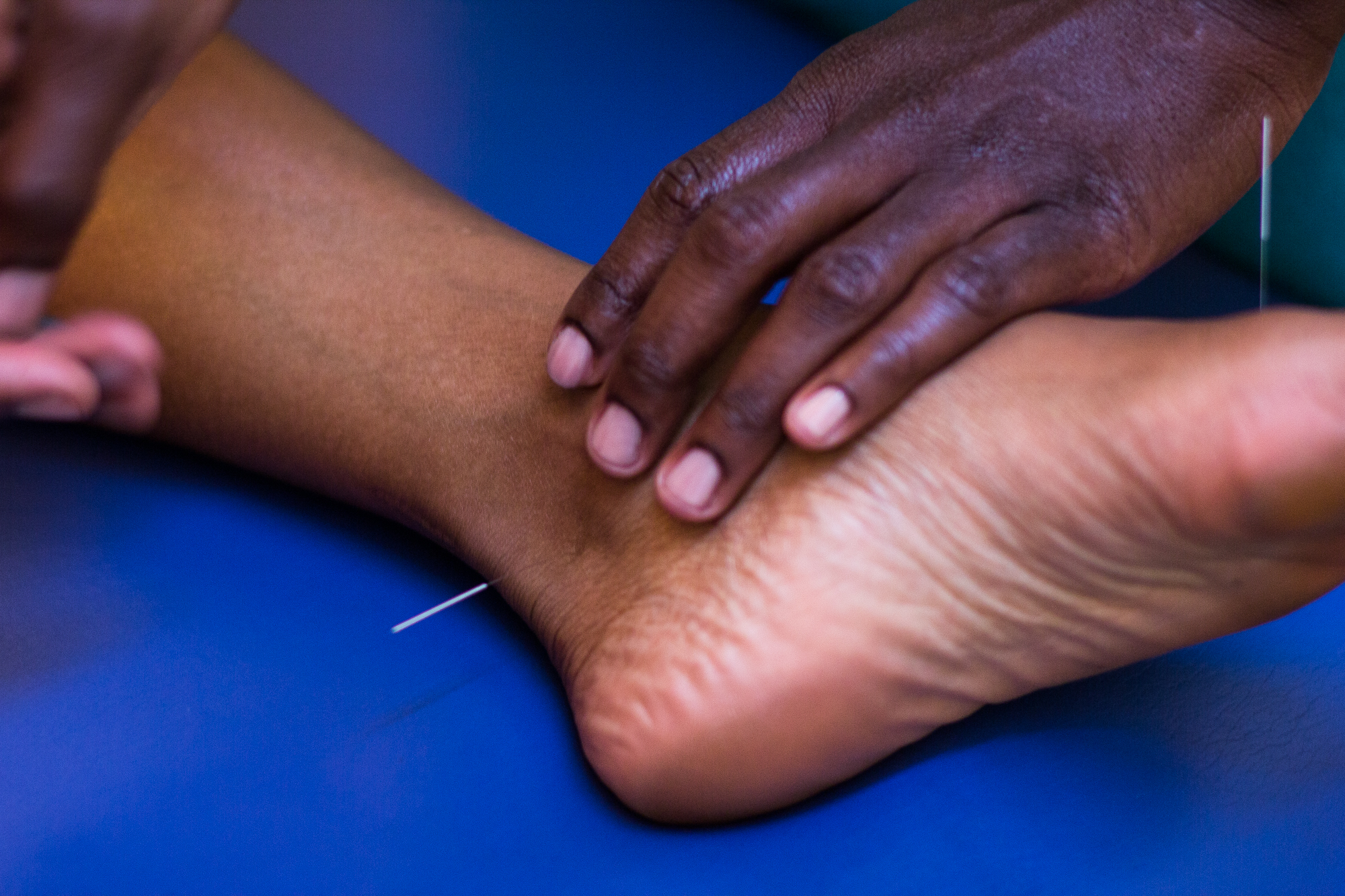
Japanese acupuncture uses thinner needles and shallower insertion, with a softer, more subtle touch. It’s generally the gentlest of the styles, and diagnosis often includes abdominal palpation, called hara, alongside reading the pulse. This is what I practice, and it’s part of why so many of my clients tell me it wasn’t nearly as painful as they thought it would be, or as painful as acupuncture they’d tried elsewhere.
Chinese acupuncture is the style most people picture. It tends to use thicker needles, deeper insertion, and stronger stimulation, working toward a sensation called deqi.
Korean acupuncture often works with fewer needles, concentrated in specific areas like the hands, using systems such as Korean Hand Therapy to influence the whole body from just a few points.
None of these is better than the others. They’re simply different, and the right one depends on your body and what feels good to you. If needle sensitivity worries you at all, just ask a practitioner directly which style they practice before you book.
The care should go beyond the needles themselves
Traditional Chinese Medicine was never meant to treat only the physical. In the framework I work from, your symptoms and your emotions are read together, not separately. Anger that’s been flaring more than usual speaks through the Liver. Anxiety that shows up as a racing heart speaks through the Heart. Worry that won’t quiet down speaks through the Spleen. This isn’t a side note to your treatment. It’s part of how I actually understand what’s happening in you.
Get a feel for the space before you book
You’ll be lying still in this room for thirty to sixty minutes, so it’s worth getting a sense of what that room feels like before you commit to it. Look at the photos on a practitioner’s site, not just for polish, but for whether the space feels calm and cared for. If you can, call ahead and notice how that conversation feels: rushed, or genuinely interested in what’s going on with you? So much of what makes acupuncture work is your nervous system feeling safe enough to settle, and you can often sense whether a space is built for that before you ever walk in.
Ask what your first visit will actually look like
A good first session should feel like a real conversation, not a quick form and a table. You should leave with some understanding of what’s happening in your body and where you’re headed from here, not just a receipt.
If you’re not sure what to expect, ask. Any practitioner worth seeing will be happy to walk you through it.
What makes CARRINNA different
At CARRINNA, in downtown Lafayette, I start with your whole picture, your symptoms and also everything that’s been quietly building underneath them. A few things that set my practice apart:
I use Japanese acupuncture specifically because it’s the gentlest style. If a painful experience elsewhere has kept you from trying acupuncture again, this may feel like something entirely different.
Every session reads your physical symptoms alongside your emotional patterns, through the same organ-emotion framework I described above. That’s not an add-on to your treatment plan, it’s part of how your diagnosis gets made from the start.
I specialize in supporting perimenopause and chronic pain, and I also offer facial acupuncture and spiritual life coaching under one roof. If you’re moving through more than one kind of transition at once, you don’t have to explain your whole story to three different people.
Choosing the right acupuncturist was never about finding the most reviews. It’s about finding someone whose way of practicing actually meets you where you are. If this sounds like what you’ve been looking for, I’d love to meet you.
Book Your Session
FAQ
You can search a practitioner’s name in the California Acupuncture Board’s license lookup to confirm their credentials are active.
Some plans cover it, especially for pain-related conditions, and coverage varies quite a bit. I’d encourage you to call your provider directly and ask about your acupuncture benefits before your first visit. I don’t bill insurance directly, but I can provide a superbill so you can seek reimbursement from your provider if your plan covers it.
Wear something loose and comfortable, and come ready to talk through your health history in real detail. First visits tend to run longer than follow-ups to make room for that conversation.
This really does vary by person and condition, so it’s a fair thing to ask about directly in a consultation, once there’s been a proper diagnosis and examination. Ideally, you should feel more relaxed after your very first session.
Most people describe it as a light sensation rather than pain, thanks to the thinner needles and gentler insertion this style uses.