
Share
If menopause has brought on mood swings, irritability, or a heaviness you can’t quite explain, Western medicine will point you to declining estrogen. That’s true, but it’s not the whole picture. In Traditional Chinese Medicine, we look at two specific systems: Kidney Jing, the essence that governs your reproductive aging, and Liver Qi, the energy responsible for keeping emotions flowing smoothly. When both shift at once — which is exactly what happens during menopause — the emotional symptoms that follow make a lot more sense.
Kidney Jing: The Root of the Transition
In TCM, Kidney Jing is your foundational reserve — inherited at birth, spent gradually over a lifetime, and directly tied to reproductive aging. Menopause is understood as the natural point where Kidney Jing has declined enough that the body shifts out of its reproductive years. This isn’t a malfunction; it’s the expected trajectory. But as Jing declines, it can no longer anchor and nourish the Liver the way it once did — which is where the emotional symptoms usually start.
Liver Qi: Why Emotions Feel Less Steady
The Liver is responsible for the smooth, unobstructed flow of Qi throughout the body — including your emotional state. When Liver Qi flows freely, emotions move through you without getting stuck. When it stagnates, they don’t: irritability, frustration, a short fuse, or a sense of being emotionally “stuck” are the classic signs of Liver Qi stagnation. Because Kidney Jing normally nourishes and stabilizes the Liver, declining Jing during menopause often leaves Liver Qi with less support — which is exactly when stagnation shows up.
This is also why menopausal irritability so often has a different flavor than sadness or low mood: it’s less “I feel down” and more “I feel like I could snap.” That’s a Liver Qi pattern, not a Kidney pattern — and it responds to different tools.
How Acupuncture Addresses Both
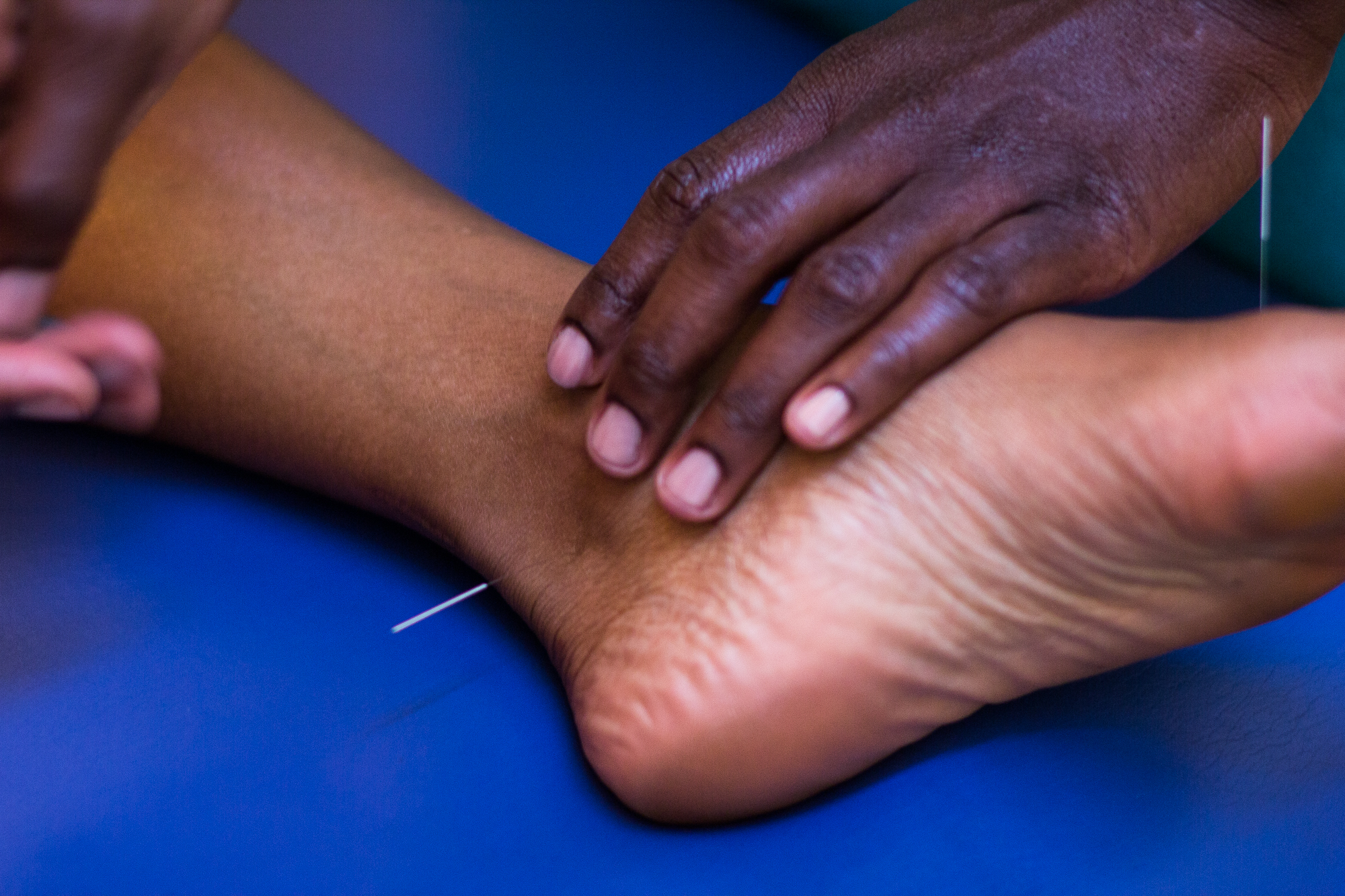
Acupuncture treatment for menopausal emotional symptoms typically works on two levels at once: points that nourish and tonify Kidney Jing (supporting the root), and points that move Liver Qi (relieving the stagnation causing the day-to-day symptoms). Treating only one side of this rarely gives lasting relief — it’s the combination that tends to produce real change. This is part of why a course of regular sessions, rather than a single visit, works better for emotional symptoms during this transition.
Supporting Liver Qi and Kidney Jing at Home
Move your body daily, even gently. Liver Qi thrives on movement. Walking, stretching, and yoga all help keep it flowing rather than stuck — which is part of why exercise reliably improves mood during menopause.
Protect your sleep. Kidney Jing is replenished (not created — it can’t be replaced, only conserved) during deep rest. Poor sleep accelerates the sense of depletion many women feel during menopause. See our guide on the power of sleep for specifics.
Watch what drains you. Chronic stress, overcommitment, and suppressed frustration are classic Liver Qi stagnation triggers. If you recognize this pattern, our piece on perimenopause anger covers it in more depth, even though the mechanism carries into menopause too.
Eat to support, not deplete. Nourishing, warming foods support Kidney Jing, while excess caffeine, alcohol, and erratic eating patterns tend to aggravate Liver Qi stagnation. Our guide to diet and menopausal symptoms goes into this further.
Give emotions somewhere to go. Journaling, honest conversation, and physical release (even a hard workout) all help Liver Qi move rather than back up. Suppressing frustration is one of the more reliable ways to intensify it.
When to Get Support
If mood swings, irritability, or low mood are affecting your daily life, relationships, or work, that’s worth addressing directly rather than waiting it out — through your healthcare provider, a therapist, or acupuncture tailored to your specific pattern. Most women benefit from combining approaches rather than relying on just one. If you’re earlier in the transition, our perimenopause and menopause guide is a good place to see how this stage connects to what came before it.
If you’d like a personalized plan built around your specific pattern, book a consultation.
Frequency Asked Questions
In TCM terms, this is a Liver Qi stagnation pattern rather than a Kidney deficiency pattern — irritability, a short temper, and a “stuck” feeling point to Qi that isn’t flowing smoothly, which is common as declining Kidney Jing leaves the Liver with less support during menopause.
Not restored to its original level — Jing is a finite, inherited reserve that naturally declines with age, which is part of why menopause is a one-way transition rather than something to reverse. The goal isn’t to restore it, but to conserve what remains and support the body in adapting well to the new baseline.
It’s not a contradiction — declining estrogen is the biomedical explanation, while Liver Qi and Kidney Jing are a different framework for understanding the same transition. Many women find the TCM lens useful because it points to specific, actionable patterns (stagnation vs. depletion) rather than a single blanket cause.
Many women notice some shift within 3-4 sessions, though a full course addressing both Kidney Jing and Liver Qi patterns usually spans several weeks to months, since this is a gradual transition rather than an acute condition.
Some herbal formulas in TCM are specifically chosen to nourish Kidney Jing or move Liver Qi, which is a different approach than most Western herbal supplements taken for menopause symptoms generally. It’s worth discussing your specific pattern with a practitioner rather than self-selecting herbs based on symptoms alone.
The same Liver Qi and Kidney Jing dynamic is at play throughout perimenopause as well — it’s a gradual pattern, not something that starts abruptly at menopause. If you’re still in the perimenopausal stage, our perimenopause anger and perimenopause depression posts cover the earlier version of this same picture.